With their staggering power and awe-inspiring beauty, waterfalls are one of the most popular natural wonders to visit on Earth. However, if you were hoping to see the world’s tallest waterfall, then you’d better pack your diving gear.
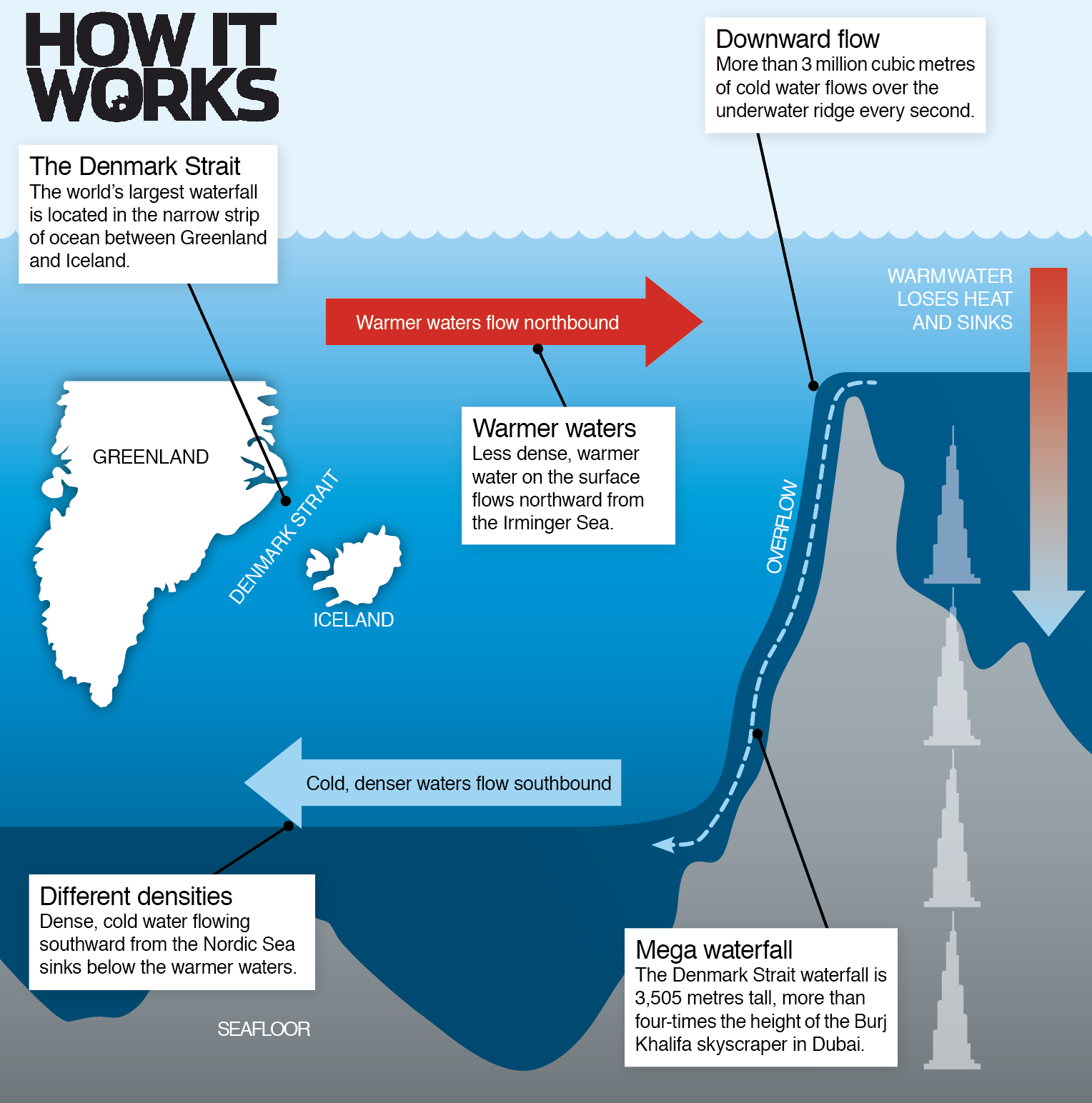
While most people think of Venezuela’s Angel Falls as the largest waterfall in the world, that title actually goes to a ridge beneath the Denmark Strait. Here, starting 600 metres below the water’s surface, is a waterfall that plunges 3,505 metres to the seafloor.
This underwater cascade is made possible due to differing water densities. In the strip of sea between Greenland and Iceland, cold waters from the north meet warmer waters from the south. The molecules in cold water are less active and more tightly packed together than those in warm water, making them much denser. Therefore, when the two meet, the cold water sinks below the warm water, where it flows over an enormous ridge to create an undersea waterfall.
As well as being incredibly tall, the Denmark Strait waterfall is also very wide, stretching 160 kilometres across. It really would be an incredible sight to behold on land, but unfortunately, as it is already surrounded by water, the falls are completely undetectable without scientific equipment. So maybe hold off on packing your bags just yet!